
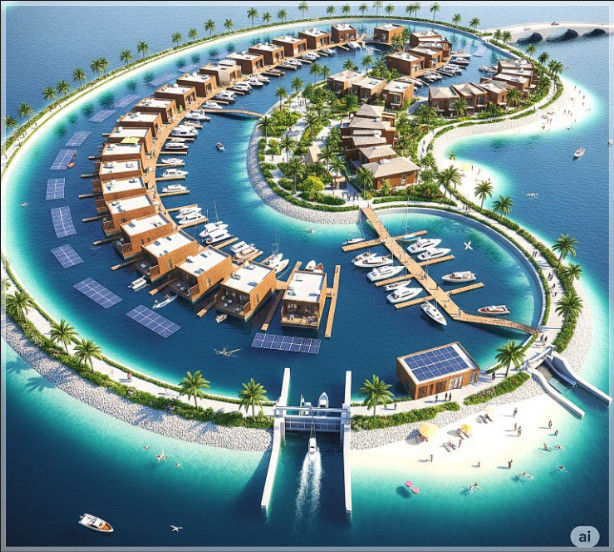
Vicharn Group (VG) to invite investors in Thailand or abroad to buy land allocated for doing 63 businesses related to water-related residences on artificial islands, or it could be information for entrepreneurs to open new branches in Thailand.
Infographics for Maldives in Thailand (MIT)



Business crises and challenges in
Maldives & Caribbean
Hotel / Resort in Maldives Styles
Analyed issues by AI
69 Photos by AI


For Thailand and investors to invest in building hotels / resorts in Maldives Styles
1. The Strength , Crisis , Challenges of Hotels/ resorts in the seas and on the islands in Maldives


2. The Strength , Crisis , Challenges of Hotels / resorts in the seas and on the islands in the Caribbean


Item 1 : Strategic Report for the Development of Luxury Sea and Island Hotels and Resorts in Thailand: Lessons from Maldives and the Caribbean

1.) Executive Summary
This report provides a detailed comparative analysis of the strengths and best practices of luxury sea and island hotels and resorts in the Maldives and the Caribbean. The study reveals that the Maldives excels in offering unparalleled privacy, innovative overwater villa designs, and exceptionally attentive personalized butler services, alongside a strong emphasis on marine environmental conservation. In contrast, the Caribbean stands out for its vibrant integration of local culture, diverse range of land and water activities, and the evolution of the All-Inclusive model into a sophisticated luxury offering.
For Thailand, a global tourism destination blessed with natural beauty, rich cultural heritage, and excellent service, there is a unique opportunity to synthesize these global best practices. By combining the cutting-edge design concepts and privacy focus from the Maldives with the deep cultural integration and comprehensive All-Inclusive models from the Caribbean, and further elevating these with the distinctive Thai service ethos, Thailand can create a new generation of luxury resorts that offer "Authentic Sustainable Luxury." This will set new benchmarks in the global tourism market and strengthen Thailand's position as a leader in high-end hospitality.
-1.jpg)
2.) Introduction
Thailand has long been a global tourism destination, renowned for its natural beauty, rich cultural heritage, and excellent service. The luxury tourism sector, in particular, holds significant growth potential, driven by increasing demand from discerning travelers seeking exclusive and unique experiences. This report is prepared to support this growth by drawing lessons from leading luxury tourism markets worldwide.
This report serves as a strategic intelligence document, meticulously analyzing the unique features, design philosophies, guest experiences, and sustainability initiatives of high-end overwater and island resorts in two prominent luxury destinations: the Maldives and the Caribbean. The primary objective is to extract practical insights and innovative concepts that can be adapted and implemented to inspire and inform the development of a new generation of luxury resorts in Thailand, thereby enhancing its competitive edge in the global luxury hospitality landscape.
3.) Strengths of Overwater and Island Hotels and Resorts in the Maldives
Unique Design and Architecture
Resorts in the Maldives specialize in blending luxurious design with pristine natural surroundings. A key design principle emphasizes harmony with nature, often utilizing high-quality, locally sourced materials to create structures that feel integrated with the natural environment while maintaining sophistication. This approach ensures that resorts enhance the beauty of their stunning surroundings rather than overshadowing them.
Overwater villas in the Maldives are renowned for their innovative architectural features, which create an unparalleled guest experience. Unique elements include transparent glass floor panels, often referred to as "Tahitian televisions," allowing guests to observe vibrant marine life directly from their living spaces. Beyond visual immersion, some villas feature retractable roofs for stargazing from the comfort of the bed or private water slides that plunge directly into the turquoise lagoon, adding a playful and exclusive dimension to the stay. For instance, W Maldives exemplifies this with its "Above and Below the Water" design philosophy, seamlessly integrating the ocean and natural landscapes with cutting-edge architecture and interiors, using floor-to-ceiling windows to connect guests with the island's vast horizon.
The consistent emphasis on unique design, luxurious interiors, and specific features like glass floors and water slides suggests that design in the Maldives is not merely about aesthetics but is a fundamental component of the luxury experience. Glass floors transform rooms into living aquariums, creating a continuous and immersive connection with the marine environment. Retractable roofs elevate ordinary bedrooms into unique observatories, enhancing a sense of romance and exclusivity. These elements demonstrate how physical design actively contributes to the core value proposition of the resorts: unparalleled connection to nature and customizable luxury. For Thailand, this indicates that investing in innovative and context-specific architectural and interior design should be a top strategic priority. Design should be viewed as an experience-generating tool, not just a structure, actively engaging guests' emotional and sensory journeys by leveraging Thailand's unique natural beauty and cultural heritage in innovative and immersive ways that transcend conventional luxury.
The repeated mention of "total privacy: secluded settings, private access, and dedicated spaces far from the crowds" , "private sanctuary amid crystal waters" , and "exclusive access" reinforces that privacy is the paramount feature. This is not just about having a private room but about creating an entire
ecosystem of solitude. Design elements such as direct lagoon access from private decks 1 and the presence of private islands 2 underscore the commitment to providing ultimate seclusion and intimacy. This level of privacy is a premium offering for affluent individuals seeking a true escape from the demands of modern life. In an increasingly connected and crowded world, genuine escape and profound privacy are becoming the ultimate luxuries. Thai resorts can build a strong competitive advantage by meticulously designing to offer truly tranquil private havens, which might involve innovative site planning, maximizing distance between accommodations, and incorporating natural barriers to ensure every aspect of the guest experience reinforces this sense of exclusive sanctuary, potentially surpassing current market offerings.
Reference :
1. Most Luxurious Overwater Villa in the Maldives – Know What’s Best
2. Best Maldives Resort on Points? The NEW JW Marriott Kaafu VS W

4.) Elevated Guest Experience
A hallmark of Maldivian luxury is its highly personalized service, exemplified by dedicated personal butler services such as "Mr./Ms. Friday" at Gili Lankanfushi or "Aris Meeha" at The Ritz-Carlton. These personal butlers are available 24/7 to anticipate and fulfill every guest's need, from arranging dining experiences and spa preparations to providing expert local knowledge and facilitating special activities. This level of attentive and thoughtful service ensures a seamless and utterly pampered stay.
Luxury villas in the Maldives boast an array of exclusive amenities designed for ultimate enjoyment and relaxation. These often include private infinity pools that seamlessly blend with the ocean horizon, private dining decks for intimate meals, in-villa spa rooms for personalized treatments, private gyms, and even dedicated wine cellars or private cinemas. These facilities ensure that guests have every luxury within their private sanctuary.
Beyond relaxation, Maldivian resorts offer immersive activities that highlight the vibrant marine ecosystem. Guests can enjoy world-class snorkeling and diving directly from their overwater villas or explore renowned coral reefs. Resorts also provide a variety of water sports through dedicated centers (e.g., WAVE Water Sports Centre at W Maldives). A unique aspect is the opportunity for private island escapes, offering ultimate seclusion. Furthermore, cultural elements are subtly integrated, such as traditional Sangu conch shell welcomes and Bodu Beru drum performances at sunset, connecting guests to Maldivian heritage. For families, specialized programs like the Ritz Kids Club offer age-appropriate activities, including sports, arts and crafts, cooking classes, and facilities like playgrounds and pools with slides.
The consistent mention of "dedicated butler service" , "24-hour Mr./Ms. Friday service" , and "Aris Meeha personal butler" indicates that these roles are explicitly designed to "tailor your experience" and provide "exclusive access to certain amenities or services". This signifies a shift from reactive service to proactive
experience curation. Butlers anticipate needs before they are requested, manage personalized itineraries, and facilitate special moments guests might not even think to ask for. This level of foresight and execution defines ultimate luxury. For Thailand, this means elevating its renowned service beyond warmth and attentiveness to a more sophisticated "experience curation" model. Empowering staff with deeper training, local knowledge, and autonomy to personalize guest journeys can transform a pleasant stay into an unforgettable, tailor-made luxury adventure. This transcends transactional service into a deeper, relational luxury, fostering a profound emotional connection with guests.
The inclusion of features such as private water slides , direct lagoon access , in-villa spas/gyms , and overwater cinemas fundamentally redefines the role of accommodation. Villas are no longer just places to sleep but become self-contained
mini-destinations for entertainment, wellness, and direct interaction with nature. The "Above and Below the Water" design philosophy further emphasizes the integration of living spaces with the surrounding environment and available activities. For luxury resorts in Thailand, this means strategically considering how villa design and surrounding private areas can be enhanced to become unique activity hubs. This might include private pools with integrated seating, outdoor showers that double as private relaxation areas, or even small private cooking stations. By making accommodations multi-faceted sources of activity, resorts can significantly increase the perceived value and exclusivity of a stay, reducing the need for guests to seek entertainment elsewhere and fostering a deeper sense of private sanctuary.

5.Sustainability and Conservation Initiatives
Maldivian resorts are pioneers in sustainable operations, driven by the fragile island ecosystem. They implement comprehensive eco-friendly initiatives, including on-site Reverse Osmosis (RO) water treatment plants to produce clean drinking water, significantly reducing the need for single-use plastic bottles. Waste management systems involve composting organic resort waste, recycling programs for various materials, and using treated wastewater for irrigation. Efforts also extend to reducing noise pollution from boats and promoting non-motorized water sports. Resorts also explore and adopt renewable energy solutions, such as solar power, to minimize their carbon footprint.
A key aspect of sustainability in the Maldives is active marine conservation. Resorts engage in coral planting programs, often inviting guests to participate, to restore and protect delicate coral reefs. Regular reef cleanups are conducted to ensure a healthy marine environment, raising awareness among guests and staff about ocean conservation. Partnerships with environmental programs, such as The Ritz-Carlton's collaboration with Jean-Michel Cousteau’s Ambassadors of the Environment, offer unparalleled opportunities for guests to connect with the island's natural beauty and promote environmental stewardship through immersive, hands-on activities focused on marine conservation and sustainable practices.
The elaborate and actively promoted sustainability efforts in the Maldives demonstrate that environmental stewardship is no longer merely an operational necessity or a niche concern but has evolved into a core brand pillar and a significant competitive advantage in the luxury market. Resorts are not just implementing these practices but integrating them into the guest experience and communicating them transparently, recognizing that affluent travelers increasingly value ethical and eco-conscious travel. For Thailand, positioning new luxury resorts as leaders in sustainable practices can attract a global clientele seeking more responsible and environmentally friendly travel options. This means moving beyond regulatory compliance to innovate in sustainable operations, transparently communicate efforts, and offer tangible guest engagement in conservation, thereby enhancing brand reputation and market appeal.
.

6. Table: Key Design Elements and Their Impact on Guest Experience in Maldivian Luxury Villas
Item / Design Element / Example Resorts / Impact on Guest Experience
1. / Glass Floor Panels / Soneva Jani, OZEN LIFE MAADHOO, Gili Lankanfushi, W Maldives / Immersive marine life viewing and connection to the underwater world
2. / Retractable Roofs / Soneva Jani / Unique stargazing experience and enhanced romance
3. / Private Water Slides / Soneva Jani, W Maldives, Gili Lankanfushi / Playful and direct lagoon access
4. / Private Infinity Pools / OZEN LIFE MAADHOO, The St. Regis Maldives Vommuli, Waldorf Astoria Maldives Ithaafushi, Gili Lankanfushi, W Maldives, The Ritz-Carlton / Seamless indoor-outdoor living and panoramic views
5. / Outdoor Bathrooms / Gili Lankanfushi, W Maldives / Ultimate privacy and relaxation amidst nature
6. / Private Sundecks with Direct Ocean Access / Gili Lankanfushi, OZEN LIFE MAADHOO, W Maldives / Enhanced sense of seclusion and immersion in nature
7. / Overwater Catamaran Nets / Gili Lankanfushi / Unique and relaxing lounging over the water


7. Strengths of Sea and Island Hotels/Resorts in the Caribbean
7.1 Integration of Luxury and Local Culture
Luxury resorts in the Caribbean often incorporate architectural styles that reflect the region's rich history and diverse cultural influences, including colonial heritage and vibrant local aesthetics. This creates a unique sense of place specific to each island.
A key differentiator for luxury resorts in the Caribbean is the active integration of local culture into the guest experience, going beyond superficial displays. They offer immersive activities such as local craft markets, pottery workshops, traditional cooking classes, and dance lessons. Guests can also participate in or observe vibrant local festivals like Crop Over in Barbados or Trinidad Carnival. Resorts often facilitate engagement with local communities and cultural heritage, including rum heritage tours, Chattel House architecture tours, and explorations of local art districts.
While Maldivian luxury primarily focuses on natural immersion and privacy, Caribbean resorts actively and explicitly integrate local culture into the luxury experience. This is not just about serving local food but about facilitating
participatory experiences such as cooking classes, dance lessons, and participation in local festivals. This transforms a passive vacation into an active and enriching cultural journey, appealing to guests who seek deeper engagement and authenticity beyond mere relaxation. For Thailand, this highlights a significant opportunity to leverage its incredibly diverse and rich cultural heritage (cuisine, traditional arts, ancient traditions, vibrant festivals) to create authentic and immersive experiences within luxury resorts. This can move beyond generic cultural shows to genuine interaction and learning, making a luxury stay uniquely Thai and profoundly memorable.


8.Diverse Facilities and Activities
Overwater bungalows in the Caribbean, though less common than in the Maldives, offer similar luxurious features, including glass floor panels for marine life viewing, private infinity pools on expansive decks, and overwater hammocks for ultimate relaxation. Direct access to the turquoise sea for swimming and snorkeling is standard.
Caribbean resorts excel in offering a wide array of activities, catering to diverse interests and multi-generational travel. Water activities include kayaking, snorkeling, sailing (e.g., Hobie Cats), paddleboarding, and world-class scuba diving in sites renowned for visibility and marine life. Resorts some feature extensive water parks with slides and splash areas, as well as a variety of motorized and non-motorized water sports. Land activities are equally diverse, ranging from adventurous pursuits like rainforest ziplining, mountain biking, and challenging hikes (e.g., Pitons in St. Lucia) to more relaxed options such as botanical garden tours, golf courses designed by legends, and wellness experiences like volcanic mud treatments and indigenous herb therapies.
The sheer volume and variety of activities listed for Caribbean resorts indicate a strategic shift from providing amenities to creating a comprehensive
experiential ecosystem. This approach aims to offer something for every guest, from extreme adventure to serene wellness, either within the resort or easily accessible. The strong emphasis on large water parks and diverse kids' programs positions the Caribbean distinctly for multi-generational appeal, contrasting with the prevalent couples and romance focus in the Maldives. This broader appeal allows resorts to capture a wider market segment. For Thailand, this implies designing resorts that can cater to a broad spectrum of luxury travelers, including families and groups, by offering a diverse range of high-quality activities. This might involve developing unique Thai-centric adventures (e.g., jungle trekking, ethical elephant encounters) or integrating wellness programs rooted in traditional Thai practices, thereby expanding market reach beyond traditional luxury segments.
-1.jpg)
9. All-Inclusive Model and Personalized Service
The All-Inclusive model is central to Caribbean hospitality, offering unparalleled convenience and perceived value. A single, comprehensive rate typically covers accommodation, gourmet dining at multiple restaurants, unlimited premium beverages, and a curated selection of activities and entertainment. This eliminates the need for daily financial transactions and planning, providing a truly stress-free vacation experience.
While All-Inclusive resorts are often large, many maintain high staff-to-guest ratios and offer personalized service. "Butler Elite" services, trained to the highest standards, anticipate guest needs in top-tier suites, while concierge services assist with activity planning, dining reservations, and special requests. This ensures that the convenience of All-Inclusive does not compromise personalized luxury.
Historically, the All-Inclusive model was often associated with budget and mass tourism. However, the data clearly shows a significant evolution towards
luxury All-Inclusive. This shift is evident in the inclusion of gourmet dining (up to 18 restaurants 1 ), unlimited premium beverages 1 , sophisticated butler services 2 , and high-end facilities like large water parks and diverse activities. 1 The primary appeal for discerning travelers has shifted from cost savings to ultimate convenience and the predictability of a comprehensive, hassle-free luxury experience where every detail is seamlessly managed. For Thailand, this luxury All-Inclusive model can be strategically adopted and refined, moving beyond outdated misconceptions.
By ensuring the quality of inclusions (dining, service, activities) meets or exceeds premium expectations, Thai resorts can attract a luxury market segment that values pricing transparency and a worry-free, high-end, comprehensive vacation. This approach can expand Thailand's appeal to new luxury segments.
-1.jpg)
10. Table: Comparative Features: Overwater Villas and Island Resorts in Maldives vs. Caribbean
Item / Feature Category / Maldives / Caribbean
1. / Core Value Proposition / Unparalleled privacy and seclusion / Vibrant cultural immersion and diverse experiences
2. / Dominant Accommodation Type / Overwater villas / Mix of overwater bungalows and expansive land-based resorts
3. / Design Philosophy / Seamless integration with nature (Above & Below Water) / Blending luxury with local heritage (colonial, tropical)
4. / Key Amenities / Glass floors, private infinity pools, in-villa spas / Private pools, overwater hammocks, large water parks, diverse sports facilities
5. / Service Model / Highly personalized butler service (Mr./Ms. Friday, Aris Meeha) / Comprehensive All-Inclusive with personalized touches
6. / Cultural Integration / Deep marine immersion and conservation / Active cultural engagement (cooking, dance, festivals)
7. / Activity Focus / Romance, couples, high-net-worth individuals / Multi-generational families, adventure seekers
8. / Sustainability Approach / Pioneer in Eco-Luxury (RO plants, coral planting) / Developing sustainability alongside cultural preservation
9. / Pricing Model / Typically à la carte or premium All-Inclusive / Predominantly luxury All-Inclusive

-1.jpg)
11. Opportunities and Applications in Thailand
Analysis of Thailand's Strengths
Thailand possesses unparalleled natural diversity, from its iconic limestone karsts and pristine beaches to lush rainforests and vibrant marine ecosystems, providing a versatile backdrop for luxury developments. Furthermore,
Thailand's long and rich cultural heritage, encompassing exquisite cuisine, traditional arts, spiritual practices, and vibrant festivals, offers a unique and authentic dimension that few other luxury destinations can match.
Thailand benefits from a well-developed tourism infrastructure, including major international airports, efficient domestic travel links, and a robust supply chain for hospitality. This provides a solid foundation for high-end resort development and accessibility for global luxury travelers. The inherent warmth, grace, and attentiveness of Thai service are globally recognized. This "Thai smile" is a powerful intangible asset that can be refined and integrated into luxury service models to create uniquely memorable and emotionally resonant guest experiences.
While the Maldives offers highly efficient butler services , Thailand possesses a unique and globally recognized "soft power" in its service culture (the Thai smile). Its inherent warmth, grace, and attentiveness can be strategically leveraged to create a distinctive luxury service experience that is more emotionally resonant and culturally rich than mere efficiency. This suggests that luxury resorts in Thailand should not simply mimic foreign service models but deeply integrate authentic Thai cultural elements and service philosophies. This means transforming "service" into "heartfelt hospitality," where staff are empowered to share local insights and forge deeper personal connections, making the luxury experience uniquely Thai and profoundly memorable.
-1.jpg)
12. Inspired Design Concepts
Future luxury resorts in Thailand should adopt a hybrid design philosophy, blending traditional Thai architectural elements (e.g., intricate carvings, multi-tiered roofs, open-air pavilions, natural wood, and silk) with modern luxury and innovative features seen in the Maldives (e.g., glass floors, private infinity pools, seamless indoor-outdoor living).
Drawing inspiration from themed resorts in the Caribbean (e.R76, ; Centara Reserve Samui blending colonial and contemporary styles ; Pattaya Marriott inspired by sugar palm trees ), developments in Thailand should create compelling, story-driven resort concepts rooted in local history, folklore, regional crafts, or unique natural phenomena. This approach fosters a strong sense of identity and deeper connection for guests. Incorporating Universal Design principles from the outset ensures accessibility and inclusivity, broadening market appeal and demonstrating a commitment to guest-centric design.
The success of resorts like JW Marriott Phu Quoc with its distinctive "old university" theme , Centara Reserve Samui's blend of colonial and contemporary styles with tropical gardens , and even the newly opened Pattaya Marriott's sugar palm tree inspiration demonstrates that embedding a strong, coherent narrative within a resort's design creates a more memorable and emotionally resonant guest experience. This transforms physical spaces into stories, making guests feel part of something unique and meaningful. For developers in Thailand, this means strategically investing in creating unique and culturally resonant narratives for their resorts, which might involve drawing inspiration from local legends, historical periods, specific regional crafts, or unique natural phenomena. By making the resort a living story, it becomes a destination in itself, fostering deeper emotional connections and a unique selling proposition that differentiates it in the competitive luxury market.
-1.jpg)
13. Elevating the Guest Experience
Elevate the Maldivian butler model by integrating the warmth, attentiveness, and intuition of Thai service. Consider introducing roles like "Thai Host" or "Local Master" who not only provide impeccable service but also act as cultural ambassadors, sharing local insights and curating authentic, personalized Thai experiences.
Offer immersive and hands-on cultural experiences that go beyond superficial displays, which includes authentic Thai cooking classes , traditional craft workshops , guided visits to local markets and communities, and participation in community conservation projects. Leverage Thailand's diverse ecosystems for unique nature adventures: guided rainforest treks, ethical wildlife encounters, island hopping to hidden coves, and immersive marine conservation programs (e.g., coral planting).
Emphasize a "Farm-to-Table" or "Ocean-to-Table" concept, utilizing fresh, locally sourced Thai ingredients. Elevate traditional Thai cuisine to gourmet levels, offering fine dining experiences that celebrate regional flavors and culinary artistry. Integrate traditional Thai wellness practices, such as Thai massage (Nuad Thai), herbal therapies, and meditation, into world-class spa and wellness offerings, providing a holistic approach to guest well-being.
The information (Centara Reserve Samui) provides a concrete example of this concept in action, mentioning "Reserve Culture" and "Thai-style check-in with marigold floating," as well as "in-room cocktail corners with Samui-inspired drinks." This demonstrates that integrating
authentic local culture into the luxury experience is a practical and already successful strategy in Thailand. It's not about superficial cultural displays but a deep, meaningful engagement that feels genuinely Thai, which makes the resort different from generic luxury offerings found globally. For luxury resorts in Thailand, this means actively pursuing an "authentic luxury" concept, where the luxury experience is not just about opulent amenities but is truly rooted in and enhanced by Thai culture, traditions, and natural elements. By creating experiences unique to Thailand, resorts can establish a distinct value proposition that cannot be easily replicated, attracting discerning travelers seeking meaningful and culturally rich journeys.
.
-1.jpg)
14. Prioritizing Sustainability
Implement comprehensive water management systems, including on-site Reverse Osmosis (RO) plants for drinking water and recycled water for irrigation, to significantly reduce resource consumption and eliminate single-use plastics. Develop robust waste management and recycling systems, including composting organic waste and responsible sourcing practices. Proactively invest in renewable energy sources, particularly solar power, to minimize the resort's environmental footprint.
Actively engage guests in conservation efforts through programs such as coral planting, reef cleanups, and educational initiatives on marine life and climate change, fostering a sense of shared responsibility. Prioritize partnerships with local communities, sourcing local products, and creating opportunities for cultural exchange that benefit the local economy and preserve traditions. Promote non-motorized water sports and eco-friendly cleaning products to minimize ecological impact.
The elaborate and actively promoted sustainability efforts in the Maldives demonstrate that environmental stewardship is no longer merely an operational necessity or a niche concern but has evolved into a core brand pillar and a significant competitive advantage in the luxury market. Resorts are not just implementing these practices but integrating them into the guest experience and communicating them transparently, recognizing that affluent travelers increasingly value ethical and eco-conscious travel. For Thailand, positioning new luxury resorts as leaders in sustainable practices can attract a global clientele seeking more responsible and environmentally friendly travel options. This means moving beyond regulatory compliance to innovate in sustainable operations, transparently communicate efforts, and offer tangible guest engagement in conservation, thereby enhancing brand reputation and market appeal.
-1.jpg)
15.Strategic Recommendations
Invest in advanced engineering for overwater structures to ensure long-term stability and minimal environmental impact. Implement cutting-edge smart room technologies, including illuminated glass floors , personalized climate control, and seamless connectivity. Develop robust and self-sufficient water and waste management systems (RO plants, biodigesters, comprehensive recycling).
Establish specialized training programs for luxury service staff, focusing on personalized service, cultural ambassadorship, and expertise in sustainable practices, building upon Thailand's inherent service strengths. Develop compelling brand narratives that highlight the unique blend of authentic Thai culture, unparalleled natural beauty, and modern luxury. Utilize high-quality visual content (cinematic videos, professional photography) and targeted digital marketing to reach specific luxury segments (e.g., eco-conscious travelers, cultural explorers, multi-generational families, romantic escapists).
Forge partnerships with local communities, renowned Thai artists and chefs, and leading conservation organizations to enhance authenticity, support local economies, and strengthen sustainability initiatives. Adapt the luxury All-Inclusive model (as seen in the Caribbean ) to Thai preferences, offering customizable packages that provide convenience and value without compromising exclusivity or quality.
Maldivian resorts clearly demonstrate a strategy of targeting specific traveler types (e.g., Soneva Jani for "eco-luxury seekers and families looking for unique, playful experiences"; Stella Maris for "romantic escapes and privacy-loving couples"). Similarly, the Caribbean market shows segmentation (couples-only, family-friendly ). This segmentation indicates that in the competitive global luxury market, clear and differentiated positioning is crucial for sustained success and profitability. Offering generic luxury risks getting lost in the competition. For Thailand, the "one-size-fits-all" approach to luxury resort development should be avoided. Instead, new projects should define and commit to a specific luxury niche (e.g., ultra-secluded wellness retreats, family adventure hubs deeply integrated with local culture, exclusive culinary journey resorts). Every aspect of the resort, from design and amenities to service and marketing, should then be meticulously tailored to cater to that clearly defined target segment, ensuring a strong competitive advantage and clear market appeal.
-1.jpg)
16. ) Table: Practical Recommendations for Thailand's Luxury Resort Development Item / Strategic Area / Key Recommendation / Inspired By / Thai Adaptation/Opportunity
1. / Design & Architecture / Hybrid Thai-Modern design with immersive features / Maldives (design, privacy)
Integrate traditional Thai motifs with glass floors and infinity pools
2. / Guest Experience & Service / Thai-centric "experience curation" / Maldives (butler service), Caribbean (cultural integration) /
Elevate "Thai smile" to proactive "Thai Host" cultural ambassadorship
3. / Sustainability & Conservation / Comprehensive water & waste management / Maldives (Eco-Luxury) / Implement RO plants & recycling, engage local communities in conservation
4. / Business Model & Operations / Flexible luxury All-Inclusive adaptation / Caribbean (All-Inclusive model) / Offer premium All-Inclusive packages with authentic Thai culinary journeys & tailored activities
5. / Marketing & Branding / Story-driven branding & niche targeting / Maldives (niche targeting), Caribbean (cultural integration)
Develop resort themes based on Thai folklore, history, or unique natural phenomena for differentiation


17. Conclusion
The analysis reveals that luxury resorts in the Maldives excel in offering unparalleled privacy, innovative overwater designs, and exceptionally attentive personalized butler services, often with a strong emphasis on marine conservation. In contrast, the Caribbean stands out through its vibrant cultural integration, diverse range of land and water activities, and the evolution of the All-Inclusive model into a sophisticated luxury offering.
Thailand is uniquely positioned to synthesize these global best practices. By combining the ultimate luxury, intimate privacy, and innovative design of the Maldives with the rich cultural heritage, diverse activity offerings, and refined All-Inclusive models of the Caribbean, while deeply leveraging its own renowned service and natural beauty, Thailand can create a distinctive and highly competitive luxury resort market. The future of luxury hospitality in Thailand lies in creating "Authentic Sustainable Luxury" destinations that offer profoundly immersive, culturally rich, and environmentally conscious experiences, setting new global standards.
Item 2 : Report on the Crises and Challenges of Investing in Sea and Island Hotels and Resorts: Lessons from Maldives and the Caribbean for Investors in Thailand

1. Executive Summary
Investing in the hotel and resort business in Thailand's island and coastal areas holds significant potential, but it also comes with substantial challenges and risks. A thorough study of the drawbacks experienced in established regions like the Maldives and the Caribbean is therefore essential. This report analyzes key environmental, operational, financial, and socio-cultural challenges, as well as common guest complaints, to provide investors with a "reliable compass" for planning, prevention, and risk mitigation in their Thai ventures.
In the Maldives, environmental vulnerabilities such as rising sea levels and waste management issues pose structural risks to long-term asset value. Furthermore, logistical complexities, the necessity for self-sufficient utility production, and talent retention challenges contribute to high operating costs and impact service quality. Strict financial regulations also pressure resort liquidity, while a lack of interaction with local culture can lead to an incomplete tourist experience.
For the Caribbean, mass tourism has strained the environment and infrastructure. The threat of natural disasters like hurricanes requires serious risk management. Rising crime in some areas is a safety concern that affects the destination's image. Moreover, over-reliance on tourism has led to revenue leakage and low local wages, potentially causing social discontent, cultural identity loss, and guest complaints regarding food quality and boredom in all-inclusive resorts.
Lessons from both regions indicate that sustainable investment in Thailand must prioritize climate-resilient design, internal resort infrastructure, efficient resource and waste management, positive community engagement, authentic guest experiences, and prudent human resource and financial management. Adopting these approaches will help investors avoid past pitfalls and build successful, long-term sustainable hotel and resort businesses in Thailand.
-1.jpg)
2. Introduction: The Importance of Risk Assessment in Sea and Island Hotel and Resort Investment
This report aims to serve as a "reliable compass" for both Thai and international investors interested in the hotel and resort business in Thailand's island and coastal areas. The scope of the analysis will focus on all "disadvantages" or "negative aspects" found in similar leisure destinations in two key regions: the Maldives in the Indian Ocean and the Caribbean Sea. The information presented will cover environmental, operational, financial, and socio-cultural challenges, as well as guest complaints, to enable investors to prevent, mitigate, and avoid risks in their Thai investments.
Investing in the island and coastal hotel and resort industry is a high-value and complex undertaking. Investors require comprehensive and factual information to make informed decisions. Receiving incomplete information can be "dangerous for future investors," underscoring the critical importance of a thorough risk assessment before investment. Proactive risk assessment forms the cornerstone of sustainable investment in island and coastal hotels and resorts. By prioritizing a detailed understanding of "disadvantages," investors demonstrate an awareness that identifying problems in advance is far more crucial than waiting for them to materialize, thereby minimizing long-term financial and reputational damage. Comprehensive and factual data is therefore essential for investment decision-making.
-1.jpg)
3. Crises and Challenges of Sea and Island Hotels/Resorts: The Maldives Case Study
The Maldives is a popular destination for luxury overwater and island resorts. However, operating in this unique environment comes with several challenges that investors should carefully consider.
1. Environmental and Waste Management Challenges
1.1 Rising Sea Levels and Coastal Erosion
The Maldives is extremely vulnerable to climate change, with most islands averaging only 1 meter above sea level. Projections indicate that sea levels could rise by up to 15 mm by 2100, potentially submerging the entire country. Furthermore, climate change leads to an increase in extreme weather events such as storms, floods, and coastal erosion, directly impacting beaches and resort infrastructure. Reports also suggest that the Maldivian government often disregards environmental regulations and local community concerns in land reclamation projects, causing damage to livelihoods and natural resources.
The Maldives' geographical vulnerability to climate change poses a significant structural risk to long-term investment. Neglecting proper Environmental Impact Assessments (EIAs) or fast-tracking development projects without considering long-term consequences not only threatens the ecosystem but also directly jeopardizes the asset value and revenue streams of resorts in the future. If land or the surrounding environment, such as beaches and coral reefs, deteriorates or is destroyed, the value and attractiveness of the resort will significantly decrease over time. Therefore, investors in Thailand must consider climate-resilient design and construction as a fundamental factor of investment, not merely an optional add-on.
-
Additional Resources:
-
Video: Maldives turn to climate change solutions to survive l GMA:(https://www.youtube.com/watch?v=TVfe-yJvdRQ)
-
Video: Maldives overtourism environmental social impact: https://m.youtube.com/watch?v=Z1q5bG-L5Cs&pp=0gcJCY0JAYcqIYzv
-
1.2 Freshwater Scarcity and Contamination
Saltwater intrusion is a cause of freshwater source contamination, a significant problem faced by the Maldives. Additionally, there is a lack of national strategies and standards for water and wastewater management, leading to insufficient water management in tourism establishments and groundwater contamination. Many resorts must therefore invest in their own freshwater production through desalination , and some even reuse treated wastewater for irrigation.
The necessity for resorts to be self-sufficient in water supply incurs high operating costs and complexity. Investing in advanced freshwater production and wastewater treatment technologies, such as Reverse Osmosis systems or water recycling, is not merely compliance with environmental regulations but a strategic investment to build operational resilience and mitigate public health risks. Thai investors should prioritize these investments from the planning stage. Although initial costs may be high, they will reduce reliance on uncertain external water sources and control long-term expenses.
1.3 Impact on Coral Reefs and Biodiversity
Coral reefs and marine biodiversity are key attractions for tourism in the Maldives. However, climate change causes coral bleaching and loss of marine biodiversity. Furthermore, uncontrolled expansion of tourism facilities poses a serious risk to the fragile island ecosystem. Some resorts, such as The Ritz-Carlton Maldives and Vakkaru Maldives, have initiated coral restoration projects by planting new corals, demonstrating efforts to preserve natural assets.
The degradation of coral reefs directly threatens the core value of resorts and the guest experience. If the natural beauty that attracts tourists is destroyed, tourism demand will eventually decline. Investing in marine ecosystem conservation and restoration, such as coral planting programs, is not just a social responsibility but a necessary investment to preserve core revenue-generating assets and maintain the resort's long-term attractiveness. Thai investors should integrate environmental conservation projects into their business strategy from the outset to ensure the destination remains appealing and sustainable.
1.4 Waste and Disposal Management
The dispersed geography of the Maldives makes solid waste management challenging. Local households often dump waste on coastlines, polluting water sources and groundwater. Tourism contributes 21% of all waste produced in the Maldives. Many resorts face issues with non-operational waste management infrastructure due to maintenance and transportation problems. Additionally, the Maldives lacks technological adaptive capacity and sufficient waste disposal facilities. Many local islands have significant waste problems , and most resorts still transport waste to "trash islands" like Thilafushi, an unsustainable long-term approach.
Waste management is a significant environmental and reputational risk, impacting both the ecosystem and guest experience. Even if resorts maintain their premises cleanly, broader environmental issues of the destination still affect the overall image. Relying on "trash islands" is a short-term solution that cannot accommodate increasing tourist numbers. Thai investors should plan for integrated waste management systems from the beginning, such as investing in biogas plants, recycling, and reducing single-use plastics, to prevent pollution, maintain the resort's image, and avoid tourist complaints.
-
Additional Resources:
-
Video: Why this Maldives Resort Failed: https://www.youtube.com/watch?v=bkQCna-aNf4
-
Video: Maldives tourism negative aspects: https://www.youtube.com/watch?v=jQJv665KoVA
-
-1.jpg)
2. Operational and Logistics Challenges
2.1 Supply Chain Complexity and Transportation
The geographical nature of the Maldives, with over 1,000 islands across 26 atolls, poses significant logistical hurdles. Transporting goods and supplies to remote islands relies heavily on seaplanes and speedboats, which are highly susceptible to weather conditions, causing operational delays, especially during peak seasons.
The complexity of supply chains in remote areas directly impacts operating costs and disruption risks. Geographical isolation creates significant cost disadvantages and operational issues. Thai investors must assess and plan for significantly higher transportation costs, longer lead times for supplies, and the need for robust contingency plans to cope with weather-related disruptions, which will affect inventory management and service quality. Focusing on local sourcing (where feasible) and emergency supply chain planning is crucial for financial stability and guest satisfaction.
-
Additional Resources:
-
Video: Maldives resort operational challenges: https://www.youtube.com/watch?v=jf-1OvvZzIg
-
2.2 Resort Self-Sufficiency
Many resorts in the Maldives are required to be self-sufficient in power generation, water desalination, and waste management, which demands significant initial investment and ongoing operational expertise. For example, W Maldives uses an in-house biogas plant and is exploring solar power installation. The Ritz-Carlton Maldives also partially operates on solar energy and is committed to reducing single-use plastics.
Resort self-sufficiency in utilities is both a cost challenge and a sustainability opportunity. Investing in modern and sustainable in-resort utility systems, such as solar panels or closed-loop wastewater treatment, from the outset is essential to reduce reliance on potentially unstable external infrastructure and to control long-term costs, as well as to create an environmental selling point. These sustainability initiatives often serve as practical solutions to operational problems, leading to long-term cost savings and increased resilience.
2.3 Staffing and Retention
Attracting and retaining skilled staff to work on remote islands is an ongoing challenge. Recruiting international personnel often involves visa and relocation process difficulties. Additionally, staff turnover rates are high due to remote locations and limited social opportunities.
Human resource management in remote environments requires a comprehensive strategy beyond just wages. High turnover rates lead to increased recruitment and training costs and can degrade service quality. Thai investors must consider investing in employee quality of life, social opportunities, and career development to reduce turnover and maintain high service standards, which are crucial for luxury resorts. This investment in human capital directly impacts the resort's reputation and profitability.


3. Financial and Regulatory Challenges
3.1 Financial Pressure from Currency Exchange Regulations
Maldivian resorts face significant financial pressure from the Maldives Monetary Authority (MMA) requirement to exchange USD 500 per tourist, regardless of resort type or Average Daily Rate (ADR). Over 75% of resorts have an ADR below USD 800, making this requirement financially unsustainable for many. Major expenses in USD (e.g., taxes, rent, salaries, employee costs, financial costs, fuel, food, maintenance, management fees) account for over 90% of USD revenue. This forces resorts to source USD from external markets, often at higher costs, impacting financial stability, liquidity, and ability to meet contractual obligations.
Government regulations that do not account for the economic realities of the industry can create severe financial burdens and undermine profitability. Thai investors must conduct a detailed analysis of the country's monetary policies, taxes, and currency exchange regulations to assess potential regulatory risks and their impact on project cash flow and financial stability. Understanding current regulations and evaluating future policy change trends is crucial to mitigate potential financial risks.
3.2 High Operating Costs
Operating resorts in remote island areas is inherently costly. Fuel expenses account for 10% of revenue, food 4%, maintenance 5%, and management fees 8%. Additionally, the necessity for self-sufficiency in power, freshwater, and waste management significantly increases initial capital expenditure and ongoing operational costs. Importing goods also results in "sticker shock" for tourists.
"Paradise costs" often come with "sky-high operating costs." Thai investors must anticipate significantly higher operating expenses (OPEX) compared to mainland resorts, including the hidden costs of maintaining complex self-sufficient systems and managing staff in remote locations. This directly impacts the necessary Average Daily Rate (ADR) for profitability and the overall financial model of the project. Efficiently managing these costs by optimizing energy use, exploring local supply chains, and investing in durable, easy-to-maintain infrastructure from the outset will be critical.
4. Impact on Tourist Experience and Local Culture
4.1 Limited Outdoor Activities During Rainy Season
The rainy season in the Maldives brings frequent rainfall, occasional severe storms, strong winds, and heavy downpours. Such weather limits popular outdoor activities like snorkeling, sunbathing, and water sports, often confining guests indoors more than desired. Some resorts may also restrict access to certain areas during heavy rain.
Adverse weather directly risks the core tourist experience and can lead to guest dissatisfaction. Thai investors must thoroughly understand the monsoon patterns in their chosen location and design resorts with high-quality and diverse indoor facilities, such as spas or cooking classes, to maintain guest satisfaction during inclement weather. Providing engaging and high-quality indoor activities will ensure the resort remains attractive even in unfavorable weather conditions.
-
Additional Resources:
-
Video: Our DISASTROUS Trip To The Maldives: ((https://www.youtube.com/watch?v=GURDyHk20lg))
-
4.2 Safety Concerns of Overwater Villas
While overwater villas are luxurious, they present specific safety considerations, especially for young children. Despite fences, they may not be suitable for toddlers. Wooden decks on balconies can be slippery when wet. Guests should remain indoors during heavy rain or storms and follow resort safety guidelines.
The luxury of overwater villas comes with increased safety responsibilities and may limit the target demographic. Thai investors considering overwater villas must invest in stringent safety measures, clear communication with guests, especially families with young children, and may strategically market these villas primarily to adults or couples, which will impact revenue strategy and resort image. Investing in safety features beyond basic fencing and transparently communicating villa suitability for different traveler groups will mitigate risks and build trust.
4.3 Lack of Interaction with Local Culture
Maldivian resorts often offer limited interaction with local life. Staff typically reside in separate villages and come from various countries. Most tourists travel directly from the airport to their resort, missing opportunities to experience Maldivian culture, people, and local cuisine. Furthermore, luxury tourism benefits the wealthy more than locals, making it impossible for many locals to afford land on their home islands.
The isolation of resorts from local communities can lead to an unfulfilling experience for tourists seeking authenticity and create social inequalities that may pose a long-term threat. Thai investors should consider genuinely integrating local culture and creating tangible benefits for communities, such as local employment, sourcing local products, or offering cultural experiences, to enhance the resort's appeal and foster positive community relations. Over-emphasis on exclusivity in luxury resorts without balancing local integration can lead to a product lacking unique identity and social issues.
-
Additional Resources:
-
Video: I HATED THE MALDIVES: ((https://www.youtube.com/watch?v=bh8qVRNkozc))
-
Video: Maldives tourism negative aspects: ((https://www.youtube.com/watch?v=GURDyHk20lg))
-
Video: Maldives tourism impact on local culture negative: ((https://www.youtube.com/watch?v=THRDxr6JBP0))
-
.
-1.jpg)
4.) Crises and Challenges of Sea and Island Hotels/Resorts: The Caribbean Case Study
The Caribbean Sea is another region with extensive island and coastal tourism development, but it faces different challenges, offering crucial lessons for investors in Thailand.
1. Environmental and Infrastructure Challenges
1.1 Impacts of Mass Tourism: Marine Pollution, Waste
Although the Caribbean tourism industry heavily relies on its natural environment, it causes significant negative impacts such as marine pollution and degradation. Tourists use three times more water per day than residents and generate four times more solid waste. Waste management systems in many countries cannot cope with the increased volume of waste. Cruise ships are a major source of marine pollution, discharging sewage, grey water, hazardous chemicals, and large amounts of garbage into the sea, affecting 14% of coral reefs. Additionally, cruise ship anchoring and diving activities cause coral reef destruction.
While mass tourism in the Caribbean generates revenue, it places immense strain on the environment and infrastructure. Neglecting marine pollution and tourist waste, especially from cruise ships, will lead to the degradation of natural resources, which are key tourist attractions. Investing in efficient waste and wastewater management systems, as well as promoting sustainable tourism, is not just regulatory compliance but an investment to preserve assets and business reputation in the long term.
-
Additional Resources:
-
Video: Caribbean resort environmental impact problems: ((https://www.youtube.com/watch?v=34O7H4KBQ))
-
Video: Climate change and how it affects the tourism in the Caribbean: ((https://www.youtube.com/watch?v=7S-C1tBtWm8))
-
1.2 Vulnerability to Natural Disasters: Hurricanes
The Caribbean hurricane season typically runs from June 1 to November 30. While traveling during this period offers benefits like fewer tourists and discounts , there is a significant risk of hurricanes, which can lead to substantial drops in tourist numbers (25-50% immediately after a disaster) and recovery taking 10-12 months. Some islands, such as Barbados, Trinidad, Grenada, and the ABC islands (Aruba, Bonaire, Curaçao), are considered safer with lower chances of severe weather.
Vulnerability to natural disasters like hurricanes is a significant structural risk to investment in the Caribbean, directly impacting business continuity and return on investment. Thai investors must thoroughly assess natural disaster risks in their chosen location and invest in climate-resilient infrastructure, including comprehensive emergency plans and insurance, to minimize damage and ensure rapid recovery.
-
Additional Resources:
-
Video: Are Coastal Investments Worth the Risk?: https://www.youtube.com/shorts/Wp4nQbw5gdA
-
Video: investing in tropical resorts risks: ((https://www.youtube.com/watch?v=M3HTBA6lxnc))
-
1.3 Infrastructure Issues (Roads, Water, Electricity)
The Caribbean faces significant deficiencies in infrastructure, hindering climate change resilience. Waste management is a major issue, especially plastic pollution contaminating rivers and seas. Many countries lack adequate waste management infrastructure, and long-term reliance on landfills is unsustainable due to limited space. There is also high reliance on fossil fuels for energy production, leading to high energy costs and unreliable service with frequent interruptions. Road infrastructure deteriorates rapidly due to climate impacts and inadequate standards. High non-revenue water rates (up to 45%) indicate inefficiency in water distribution.
The incomplete infrastructure in the Caribbean reflects hidden costs that investors must bear. Self-sufficiency in utilities or investing in improving surrounding infrastructure is essential to guarantee service quality and long-term guest satisfaction. Thai investors should carefully assess infrastructure readiness in target areas and budget for additional investments if necessary to ensure smooth and efficient operations.
-
Additional Resources:
-
Video: investing in tropical island resorts risks: https://www.youtube.com/watch?v=MvgqtjGAIps
-
2. Safety and Crime Challenges
2.1 Rising Crime Rates
The Dominican Republic, a popular Caribbean destination, is facing increased travel warnings from the US due to significantly rising crime rates. Violent crimes such as robberies, sexual assaults, and homicides have been reported in various areas, including some tourist destinations. The US government advises tourists to exercise increased caution, not leave food or drinks unattended, be aware of surroundings, keep valuables safe, avoid walking alone, especially at night, and travel in groups. Trinidad and Tobago also has a travel advisory due to serious crime risks, including murder, robbery, assault, sexual assault, home invasion, and kidnapping.
Rising crime in some Caribbean areas directly risks tourist safety and resort reputation, potentially impacting travel demand. Thai investors must prioritize security measures within and around resorts, collaborate with local communities and law enforcement to create a safe environment, and transparently communicate safety information to guests to build confidence and reduce concerns.
3. Socio-Economic Impacts on Local Communities
3.1 Tourism Dependence and Low Wages
Despite the Caribbean tourism industry contributing over USD 60 billion to the region's total GDP in 2022, the average poverty rate in the Caribbean remains at 30%. Heavy reliance on tourism for jobs and economic stimulation has led to low wages and wealth concentration in foreign hands, perpetuating local community poverty. Governments often offer incentives to the tourism sector, such as land concessions, to boost the economy and create jobs, even if these jobs are often low-wage.
Over-reliance on tourism without equitable benefit distribution to local communities can lead to social discontent and pose a long-term risk to business sustainability. Thai investors should prioritize creating business models that promote genuine participation and tangible benefits for local communities, such as fair employment, promoting local products, and investing in community development projects, to foster positive relationships and mitigate social conflicts.
3.2 Revenue Leakage and Unequal Benefits
In 2023, 31.1 million out of 32.2 million tourist visits to the Caribbean came from cruise ships. Instead of supporting local economies, cruise lines offer low-cost excursions, generating immense profits while providing few jobs for locals. Additionally, Caribbean countries often invest heavily in port infrastructure for essential trade, but this space is then frequently lost to cruise ships. Furthermore, cruise ships often evade environmental regulations, harming fragile ocean ecosystems.
Revenue leakage from tourism and unequal benefit distribution undermine local economic development potential and create inequality. Thai investors should consider procurement policies that genuinely support local businesses and labor, as well as investing in training and skill development for locals, to ensure that investments create sustainable and equitable economic returns for all sectors. Promoting tourism that genuinely links with the local economy will mitigate social risks and foster long-term sustainability.
-
Additional Resources:
-
Video: Caribbean tourism negative aspects: https://www.youtube.com/watch?v=2rQvMZPhw_w
-
Video: Caribbean tourism negative aspects: https://m.youtube.com/watch?v=ibyomovslM4&pp=0gcJCY0JAYcqIYzv
-
3.3 Loss of Cultural Identity
Mass tourism, if not properly managed, can lead to the loss of cultural identity and the devaluation of local traditions. Traditional festivals may be altered to meet tourist expectations, losing their original meaning. Commodification of culture for consumption can lead to superficial tourist understanding. There is also a risk of cultural appropriation, and younger generations may lose interest in their heritage if they perceive it as merely for tourists.
Mass tourism, if not properly managed, can lead to the loss of cultural identity and the devaluation of local traditions, undermining long-term attractiveness. Thai investors should promote respectful and authentic presentation of local culture, avoid commodifying culture, and support projects that preserve cultural heritage to create a profound and sustainable experience for tourists.
-
Additional Resources:
-
ideo: Caribbean tourism negative aspects: ((https://www.youtube.com/watch?v=09BPPRrlugQ))
-
-1.jpg)
4. Guest Complaints Regarding Resort Experience
4.1 Food Quality and Variety
Common complaints in all-inclusive resorts in the Caribbean often relate to food quality and variety. Some guests complain about "bland" and "cafeteria quality" food. Additionally, there are restrictions on certain beverage services, such as no coffee after noon, despite being advertised as all-inclusive. There are alarming reports of moldy desserts being served, indicating hygiene issues.
Complaints about food quality and variety are significant factors affecting guest satisfaction and resort reputation. Thai investors must prioritize kitchen management and high-quality ingredient sourcing, offering diverse menus that cater to guest needs, and strictly controlling hygiene standards to ensure the dining experience is a highlight that impresses guests.
-
Additional Resources:
-
Review: Club Med Turkoise: https://www.clubmed.us/r/turkoise/y
-
Review: Wyndham Rio Mar: https://www.wyndhamriomar.com/
-
4.2 Feelings of Boredom and Isolation
Some tourists find all-inclusive vacations boring, feeling confined to the beach or pool, engaging in repetitive activities, and lacking opportunities to explore local culture. They often feel "trapped" within the resort, with no incentive to experience the visited country. These complaints suggest that some resorts may not offer sufficiently diverse or engaging experiences to attract guests seeking adventure or learning.
Guest feelings of boredom and isolation in all-inclusive resorts highlight the need for diverse and engaging experiences. Thai investors should design activities and facilities that encourage guests to explore new things, both within the resort and off-site, including promoting interaction with local culture, so that vacations are not just "sitting around" but memorable adventures.
4.3 Lack of Authenticity in Local Experience
Some all-inclusive resorts are criticized for lacking authenticity in local experiences. Guests may feel the resort is a "bubble" separating them from the real culture and lifestyle of the visited country. There are also complaints about hidden fees, such as charges for premium Wi-Fi despite being advertised as free, creating a feeling of deception. Over-emphasis on international standards in resorts can lead to a lack of unique identity and an inability to truly experience local charm.
The lack of authenticity in local experiences at all-inclusive resorts can make guests feel they are not receiving true value from their trip. Thai investors should avoid creating experiences "walled off" from the outside world and focus on presenting authentic local culture, traditions, and lifestyles through activities, design, and community engagement to create differentiation and sustainable value for the resort. Attention to small details, such as offering authentic local cuisine or organizing community-linked activities, will significantly enhance the resort's appeal.
-1.jpg)
Item 3. Lessons and Considerations for Investors in Thailand
From the case studies of the Maldives and the Caribbean, investors in Thailand's sea and island hotel and resort business can learn crucial lessons and apply them to prevent, mitigate, and avoid various risks.
1. Prevention and Risk Mitigation Strategies
1.1 Sustainable and Climate-Resilient Design and Construction
Investing in infrastructure that can withstand climate change is essential, especially in coastal and island areas vulnerable to rising sea levels, storms, and coastal erosion. Investors should consider:
-
Detailed Environmental Impact Assessments (EIA): Conduct comprehensive and independent EIAs to understand long-term risks to the ecosystem and resort assets, and strictly adhere to environmental regulations, not just minimum legal requirements.
-
Selection of Durable and Eco-Friendly Materials: Use construction materials that are resistant to marine environments, such as saltwater corrosion and strong winds, as well as sustainable materials with minimal environmental impact.
-
Flexible and Adaptable Structural Design: Design buildings and infrastructure that can withstand natural disasters like storms and floods, and plan for long-term coastal erosion prevention measures.
1.2 Investment in Robust Infrastructure
Self-sufficiency in utilities is crucial for island resorts. Investors should plan and invest in:
-
Integrated Freshwater Production and Wastewater Treatment Systems: Install efficient desalination systems and standard wastewater treatment systems to ensure sufficient freshwater supply and minimize environmental contamination, including considering water reuse.
-
Alternative and Sustainable Energy Sources: Reduce reliance on fossil fuels by investing in renewable energy, such as solar power, to lower long-term operating costs and environmental impact.
-
Sustainable Waste Management Systems: Plan comprehensive waste management systems from the outset, including segregation, recycling, composting, and reducing single-use plastics, to minimize waste volume and pollution.
1.3 Efficient Resource and Waste Management
Adopting circular economy principles in resort operations will reduce environmental impact and increase efficiency:
-
Reducing Single-Use Plastics: Use eco-friendly alternatives such as reusable glass water bottles, paper straws, and refillable bathroom amenities.
-
Sustainable and Local Sourcing: Prioritize purchasing raw materials from local and domestic sources to reduce transportation costs, minimize environmental impact, and support local economies.
-
Organic Waste Management: Utilize biogas plants or composting systems for organic waste to convert waste into energy or useful resources.
-
2. Problem Resolution and Avoidance Strategies
2.1 Fostering Positive Relationships with Local Communities
Genuine integration of resorts with local communities will mitigate social conflicts and foster sustainability:
-
Local Employment and Skill Development: Provide fair employment opportunities and invest in training and skill development for locals to ensure equitable economic benefits from tourism.
-
Support for Local Businesses and Products: Procure goods and services from local entrepreneurs to keep revenue circulating within the community and reduce income leakage.
-
Community Development Project Engagement: Invest in projects that address community needs, such as infrastructure improvements, education, or public health, to build positive relationships and a sense of shared ownership.
2.2 Offering Authentic and Diverse Experiences
To avoid boredom and lack of authenticity, investors should:
-
Design Diverse and Engaging Activities: Beyond water activities, offer appealing indoor options such as spas, libraries, fitness centers, and local cooking classes, to cater to inclement weather and diverse guest interests.
-
Promote Cultural Interaction: Organize activities that allow guests to genuinely learn about and experience local culture, such as visiting local villages, learning traditions, or tasting local cuisine, to create memorable and distinct experiences.
-
Offer High-Quality Local Cuisine: Prioritize the quality and variety of food, emphasizing fresh, locally sourced ingredients, and presenting menus that reflect Thai culinary culture to create a unique dining experience.
2.3 Prudent Human Resource and Financial Management
Effective management is crucial for long-term success:
-
Investment in Employee Welfare and Opportunities: Create a positive working environment with appropriate welfare benefits and career development opportunities to reduce turnover and retain quality staff.
-
Detailed Financial Risk Analysis: Thoroughly study and understand Thailand's monetary policies, taxes, and currency exchange regulations to assess their impact on project cash flow and financial stability.
-
Comprehensive Budget Planning: Estimate higher-than-normal operating costs for island resorts, including expenses for maintaining self-sufficient systems and managing staff in remote areas.
-1.jpg)
3. Application in the Thai Context
Thailand has high potential for developing sea and island hotels and resorts, with beautiful coastlines and rich culture. However, investors should learn from the lessons of the Maldives and the Caribbean to avoid potential pitfalls:
-
Specific Opportunities and Challenges for Thailand:
-
Opportunities: Thailand is renowned for its excellent service, diverse culture and cuisine that attract tourists, and numerous beautiful marine attractions. It also has better domestic transportation infrastructure than some areas in the Maldives or Caribbean, making island access easier.
-
Challenges: Despite its advantages, Thailand still faces environmental challenges such as marine waste, wastewater management, and climate change impacts in some areas. Additionally, uncontrolled development can lead to overtourism and social impacts on local communities.
-
-
Practical Recommendations for Investors:
-
Integrate Sustainable Development as a Core Principle: Sustainability should not be merely a marketing tool but a fundamental business philosophy embedded in every dimension, from design, construction, resource management, to community engagement.
-
Invest in Technology and Innovation: Utilize technology to enhance resource management efficiency, such as renewable energy systems, wastewater treatment, and smart waste management systems.
-
Build Partnerships with Local Communities: Develop genuine shared-value business models with local communities through fair employment, training, supporting local products, and promoting culture.
-
Create Distinctive and Authentic Experiences: Offer experiences that are not just luxurious but also deeply connected to Thai culture and nature, to create lasting memories for guests.
-
Prepare for Regulatory and Environmental Risks: Closely monitor government policy changes and have contingency plans for natural disasters and climate change.
-
-1.jpg)
4.Conclusion and Strategic Recommendations
Investing in sea and island hotels and resorts is an appealing business, yet it is fraught with complexity and diverse risks. Lessons from the Maldives and the Caribbean indicate that challenges are not limited to financial or operational aspects but also encompass environmental, social, and cultural factors. Neglecting these can lead to severe long-term impacts on business sustainability and profitability.
For investors in Thailand, understanding these drawbacks presents an opportunity for strategic advantage. Future successful investments will not merely involve constructing beautiful buildings but creating robust business ecosystems that are resilient to change, environmentally conscious, and generate shared value with local communities sustainably. Applying the prevention, mitigation, and avoidance strategies analyzed in this report will serve as a "compass" guiding investors toward prudent and successful long-term decisions in Thailand's sea and island hotel and resort industry.
Hotels in Maldives style creat by AI
1.) 20 sample photos


2.) 20 sample photos


3.) 28 sample photos


-1.jpg)